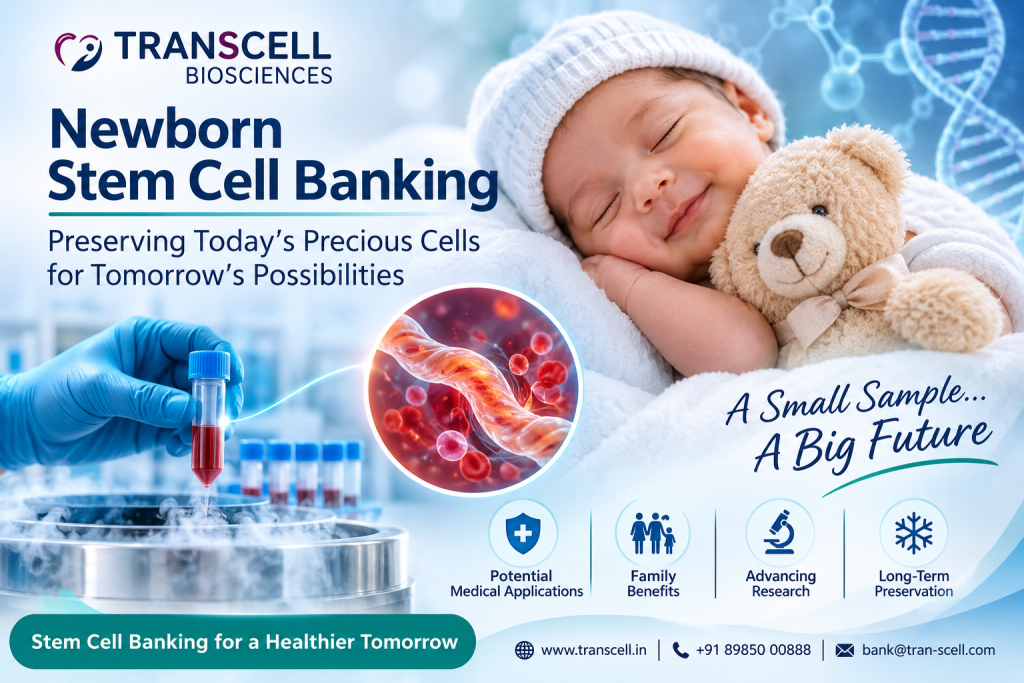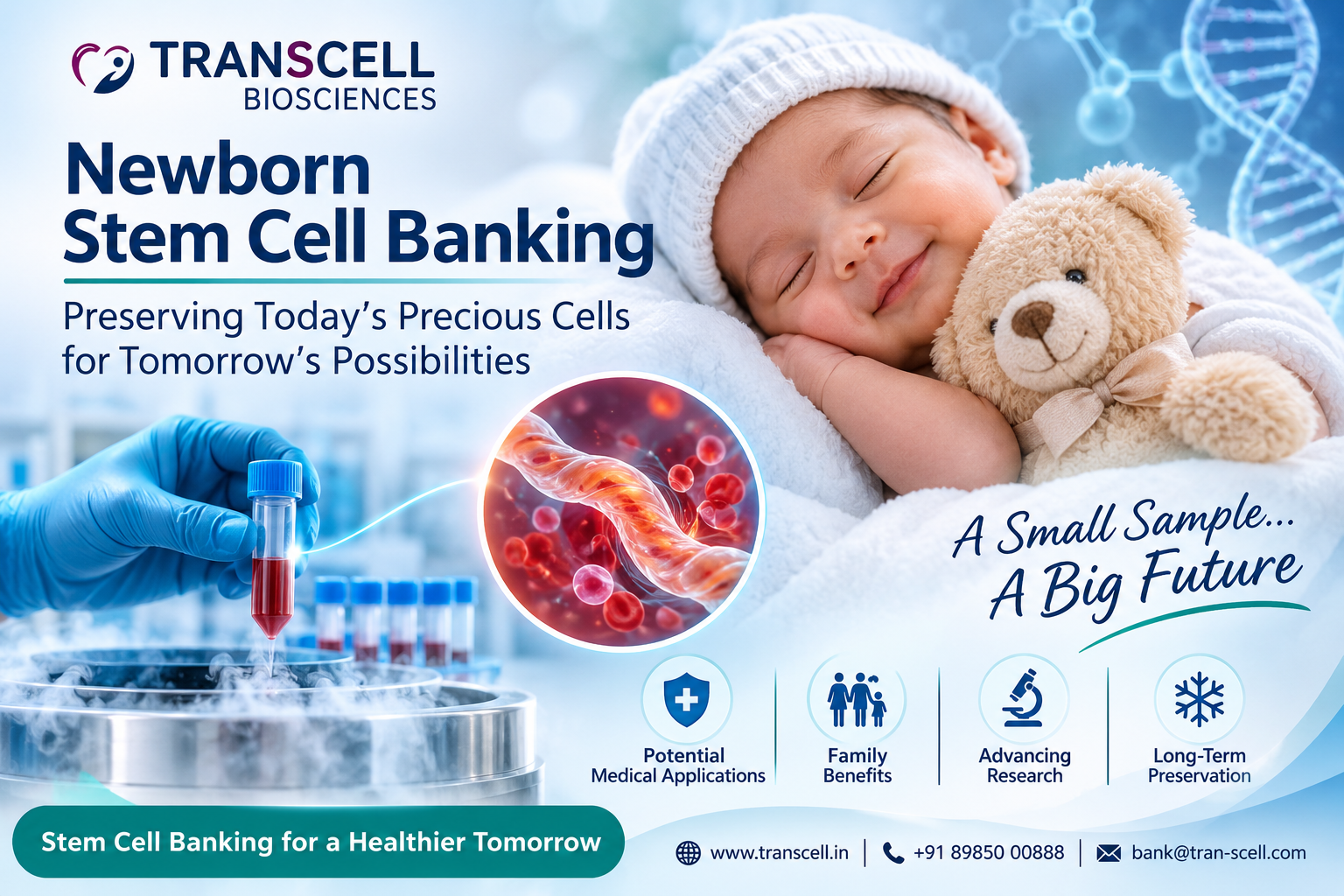
The birth of a baby brings happiness, hope, and new beginnings. Along with welcoming a new life, parents today have opportunities to learn about scientific advancements that may contribute to future healthcare options. One such advancement is newborn stem cell banking, a process that involves collecting and preserving valuable stem cells from a baby’s umbilical cord blood and, where offered, cord tissue.
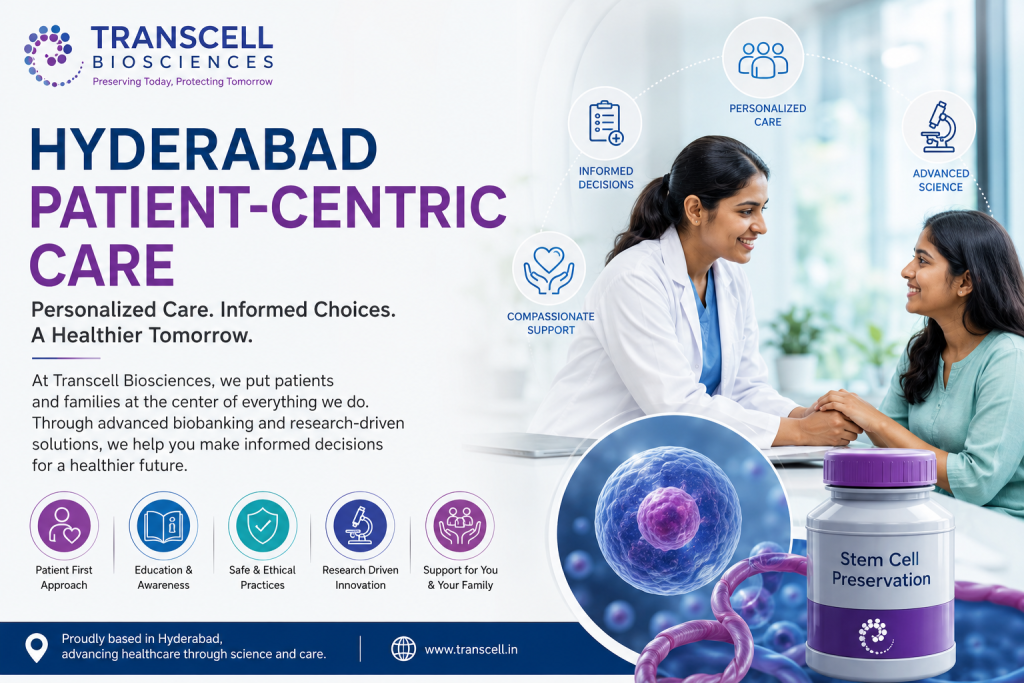
At Transcell Biosciences, the focus is on advancing biobanking and supporting the development of application-oriented and personalized medicine solutions.
What Is Newborn Stem Cell Banking?
Newborn stem cell banking is the process of collecting, processing, testing, and storing stem cells obtained from umbilical cord blood after childbirth.
Cord blood contains hematopoietic stem cells, which can develop into different types of blood cells. These cells are used in established stem cell transplantation procedures for certain blood disorders, immune system conditions, and other medical indications.
Cord tissue is also a source of different types of cells that are being studied for their potential applications in regenerative medicine.
Why Is Cord Blood Banking Important?
Cord blood is traditionally discarded after childbirth. However, it contains stem cells that can be collected and preserved for potential future medical use.
Some important reasons families explore cord blood banking include:
Potential medical applications: Cord blood stem cells are used in established transplantation treatments for certain diseases.
Family considerations: A baby’s stored stem cells are genetically matched to that child, although suitability for siblings or other relatives depends on compatibility and the medical condition.
Scientific advancement: Research continues to explore new applications of stem cells in regenerative medicine.
Long-term preservation: Cryopreservation allows collected stem cell units to be stored at very low temperatures for intended applications.
It is important to understand that storing stem cells does not guarantee they will be suitable or useful for every future illness. Actual use depends on medical eligibility, compatibility, and available evidence.
How Does the Stem Cell Banking Process Work?
At Transcell Biosciences, the ScellCare service describes a structured biobanking process involving the following stages:
Transcell+1
Enrollment: Parents select an appropriate stem cell banking plan before delivery.
Sample Collection: Umbilical cord biosamples are collected after childbirth using a specialized collection kit.
Transportation: The collected samples are transported to the laboratory for processing.
Laboratory Testing: Samples undergo testing, including screening for specified transmissible infections.
Stem Cell Processing: The samples are processed to obtain enriched stem cell components.
Cryopreservation: Suitable stem cell components are preserved under controlled storage conditions for intended applications.
Proper sample identification, processing, testing, and documentation are important throughout this process.
Why Choose Transcell Biosciences?
Transcell Biosciences focuses on biobanking functions and application-oriented healthcare solutions. Its services include:
ScellCare: Collection, processing, and cryopreservation of umbilical cord biosamples.
PREGEN: A predictive and advisory service.
HSCT: Information and services related to hematopoietic stem cell transplantation.
BARTI: BioActive Regenerative Tooth Implant.
TRUCB: A plasma fractionation-related offering.
Population Omics and Drug Discovery: Research-oriented offerings supporting scientific and medical advancements.
These offerings reflect the company’s focus on connecting biobanking, research, and potential medical applications.
When Should Parents Consider Stem Cell Banking?
Parents interested in newborn stem cell banking should learn about the process during pregnancy rather than waiting until delivery.
Discuss the following with your healthcare professional and the biobanking provider:
What samples are collected?
What stem cell components are preserved?
What testing and quality standards are followed?
How long can the samples be stored?
What are the costs and storage terms?
What medical applications are established, and which remain under research?
What happens if the collected sample is unsuitable for storage or future use?
Making an informed decision helps parents understand both the opportunities and limitations of stem cell preservation.
Conclusion: Invest in Awareness, Preserve Possibilities
Science continues to explore new approaches to healthcare, and stem cell research is an important part of that journey. Newborn stem cell banking offers families an opportunity to preserve biological material that may have potential medical applications.
At Transcell Biosciences, the commitment to biobanking, scientific innovation, and application-oriented services supports the evolving field of personalized medicine.
Learn more about stem cell banking and explore the services offered by Transcell Biosciences.
Visit: https://transcell.in/
Contact: +91 89850 00888
Email: bank@tran-scell.com