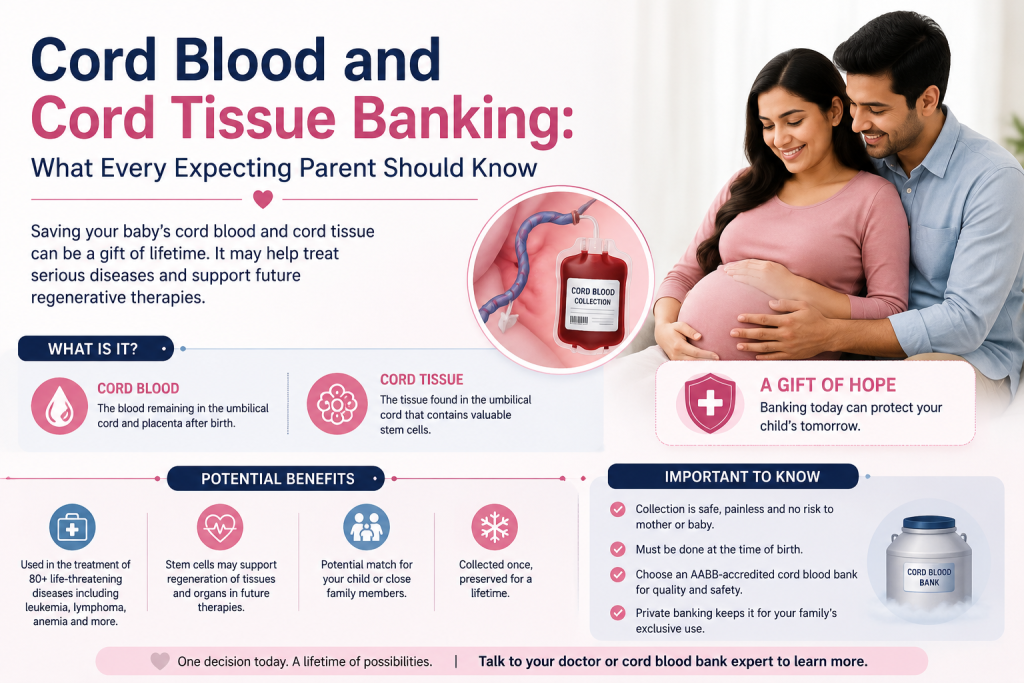
Choosing the best stem cell banking in Hyderabad is an important decision for expecting parents who are considering preserving their baby’s umbilical cord blood. Cord blood contains hematopoietic stem cells that are used in certain blood and immune-system disorders, and banking involves collecting, processing, testing and cryogenically storing the cord blood for potential future use.
With several stem cell banking providers serving Hyderabad, parents should compare laboratory standards, collection procedures, storage facilities, accreditations, costs, contract terms and medical evidence before making a decision.
What Is Stem Cell Banking?
Stem cell banking generally refers to the collection and preservation of stem cells obtained from sources such as umbilical cord blood. Cord blood is collected after delivery and contains hematopoietic stem cells that can be used in established transplant applications for selected conditions.
The process usually includes:
- Collection of cord blood after childbirth
- Transportation of the sample to the processing laboratory
- Testing and processing of the collected sample
- Measurement of important quality parameters
- Cryopreservation at very low temperatures
- Long-term storage in a controlled facility
Some providers also offer cord tissue banking as an additional service.
Why Consider Stem Cell Banking in Hyderabad?
Hyderabad has a well-developed healthcare and biotechnology ecosystem, with maternity hospitals, laboratories and healthcare professionals supporting cord blood collection and preservation services.
Parents looking for stem cell banking in Hyderabad can compare providers based on their laboratory infrastructure, sample collection network, storage arrangements and quality standards.
However, availability of a service does not automatically mean that stored cells will definitely be required or suitable for future treatment.
How to Choose the Best Stem Cell Bank in Hyderabad
The right provider should be selected after carefully evaluating several factors.
1. Check Regulatory Compliance
Parents should verify that the bank follows applicable Indian regulations and guidelines. India’s national guidelines state that umbilical cord blood banking is subject to licensing and monitoring requirements.
2. Look for Recognized Accreditations
Accreditations can provide useful information about a laboratory’s quality-management processes. For example, AABB explains that accredited cord blood facilities undergo assessment against defined standards and must address identified non-compliance before accreditation is granted.
Always verify whether an accreditation is current and whether it applies to the specific laboratory and service being offered.
3. Understand the Collection Process
Ask how the collection kit is delivered, who collects the cord blood at the hospital, how quickly the sample reaches the processing laboratory and what happens if collection is unsuccessful.
A reliable process is particularly important because cord blood collection takes place around the time of delivery.
4. Evaluate Laboratory and Storage Facilities
Ask the provider about:
- Sample processing procedures
- Quality testing
- Cryopreservation technology
- Temperature monitoring
- Backup power systems
- Emergency protocols
- Sample identification and tracking
- Long-term storage arrangements
Some providers describe cryogenic storage using liquid-nitrogen-based systems at extremely low temperatures.
5. Compare Pricing and Contract Terms
Stem cell banking costs can include collection, processing, testing and storage charges. Some companies may offer different plans based on the storage period.
Before signing a contract, ask about:
- Initial collection and processing fees
- Annual or long-term storage charges
- Renewal costs
- Additional testing charges
- Transfer or relocation procedures
- Cancellation and refund policies
- What happens if the company changes ownership or operations
Private vs Public Cord Blood Banking
Parents should understand the difference between private and public banking.
Private banking stores the baby’s cord blood for potential use by the family. Public banking makes donated cord blood available for patients who need a suitable transplant and may also support research programs.
The Indian Academy of Pediatrics has stated that public banking should generally be promoted over private banking, while private banking may be particularly relevant when a family member already has a condition for which stem-cell transplantation may be appropriate.
Therefore, parents should discuss their individual circumstances with their obstetrician, pediatrician or an appropriate transplant specialist before making a decision.
What Medical Conditions Can Cord Blood Stem Cells Treat?
Cord blood-derived hematopoietic stem cells have established applications in selected hematological and immune-related disorders. They are used in stem-cell transplantation for certain diseases, but this does not mean that stored cord blood can treat every disease or that it will necessarily be suitable for the child who donated it.
Parents should be cautious about marketing claims suggesting that privately stored stem cells are guaranteed to treat future illnesses.
Questions to Ask Before Choosing a Stem Cell Bank
Before selecting a provider, parents can ask:
- Is the facility properly licensed for the service?
- Which laboratory processes the sample?
- What quality tests are performed?
- What accreditations does the laboratory currently hold?
- How is the sample transported after collection?
- How are storage conditions continuously monitored?
- What happens during a power or equipment failure?
- What are the total costs for the entire storage period?
- What happens if the company stops providing the service?
- Under what medical circumstances can the stored sample actually be used?
Getting clear answers to these questions can help parents make a more informed choice.
Stem Cell Banking in Hyderabad: Make an Informed Decision
Several providers market cord blood and stem cell preservation services in Hyderabad. Current provider information includes services from companies such as Transcell, Cryovault, Cordlife India and StemCyte India, among others.
Rather than choosing a provider only because it uses terms such as “best,” “advanced” or “lifetime storage,” parents should independently verify the provider’s current credentials, laboratory standards, contract conditions and medical claims.
Conclusion
Finding the best stem cell banking in Hyderabad requires more than comparing prices. Parents should consider regulatory compliance, laboratory quality, collection procedures, storage technology, accreditation, customer support and—most importantly—the actual medical evidence for potential use.
Stem cell banking can be an important healthcare decision, so it is advisable to discuss the benefits, limitations and alternatives with a qualified healthcare professional before enrolling.