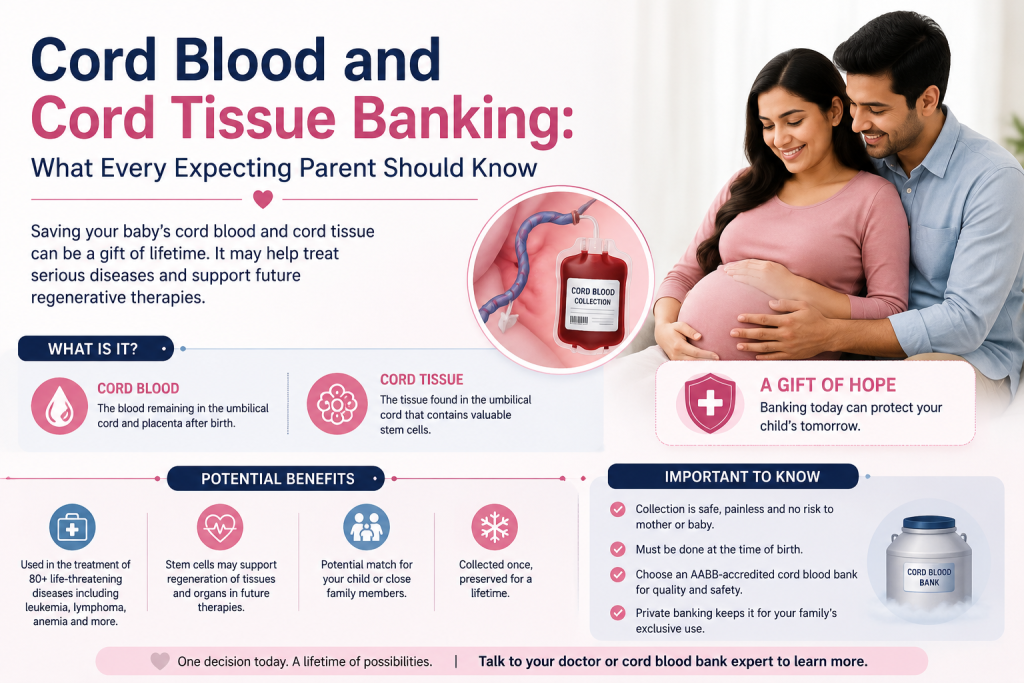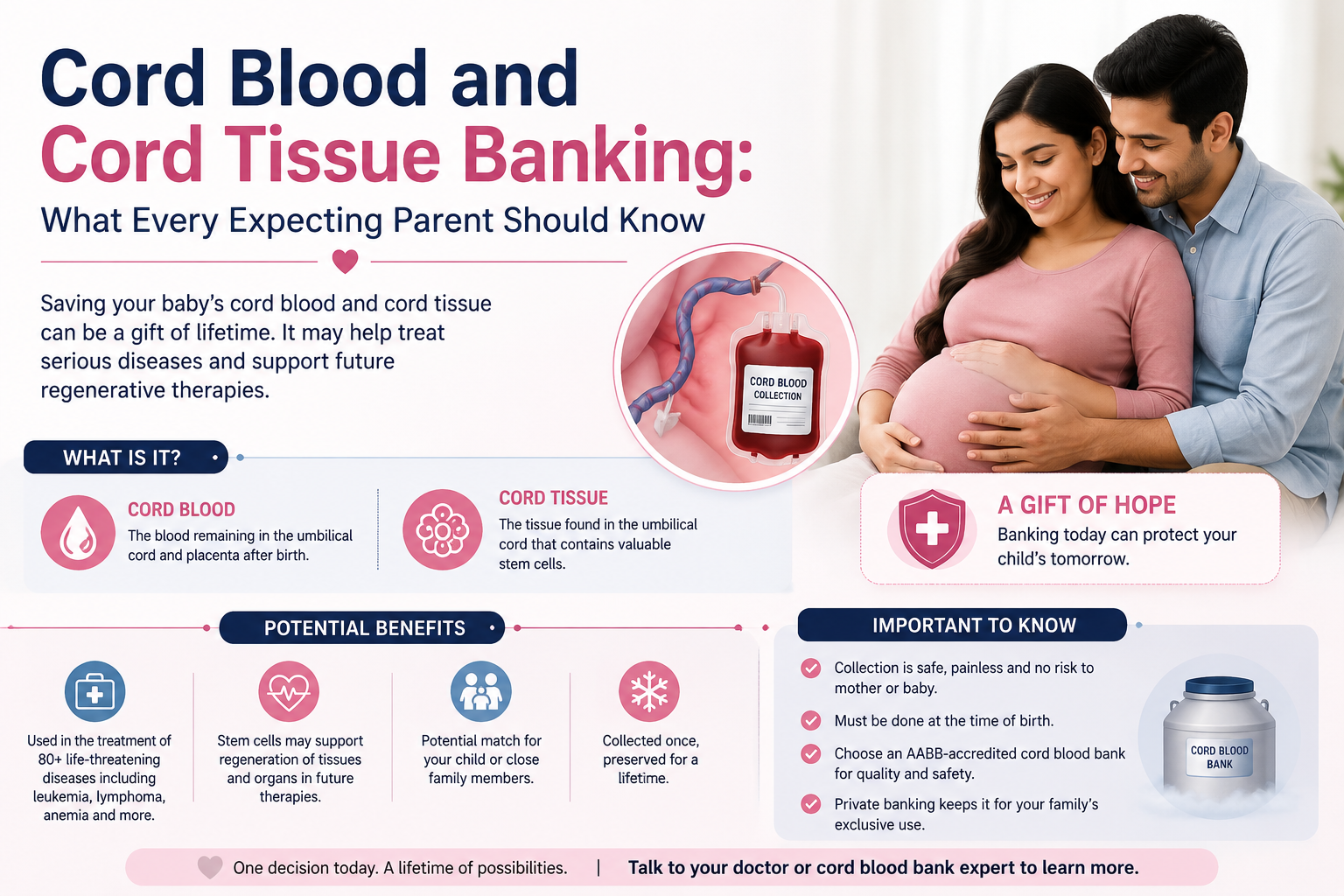
The birth of a baby is a once-in-a-lifetime moment, and modern biotechnology gives parents an opportunity to preserve certain biological resources that may have medical and research applications. Cord blood banking and cord tissue banking are two forms of newborn stem cell preservation that have gained attention among expecting parents in India.
But what exactly are cord blood and cord tissue? How are they collected and stored? What are stem cells used for? And what should parents consider before choosing a stem cell bank?
This guide explains the basics in simple language and highlights the key factors parents should understand before making a decision.
What Is Cord Blood Banking?
Cord blood banking is the process of collecting and preserving blood remaining in the umbilical cord and placenta after childbirth. This blood contains hematopoietic stem and progenitor cells, which can be used in certain hematopoietic stem cell transplantation applications.
The collection generally takes place after the baby is born and the umbilical cord has been clamped. The collected unit is then transported to a specialized laboratory for processing, testing, and cryopreservation.
Transcell Biosciences provides cord blood collection, storage, and release services through its ScellCare vertical. According to the company’s website, ScellCare is dedicated to collecting, storing, and releasing cord blood units in compliance with its CDSCO license.
What Is Cord Tissue Banking?
While cord blood contains blood-forming stem and progenitor cells, umbilical cord tissue is a different biological resource containing other types of cells, including mesenchymal stromal/stem cells that are being investigated for a range of regenerative medicine applications.
Cord tissue is collected from the umbilical cord following childbirth and can be processed and preserved for potential future applications, depending on the technology, regulatory framework, clinical evidence, and medical requirements involved.
It is important for parents to understand that cord tissue banking and cord blood banking are not the same thing. Each involves different biological materials and potential applications.
Why Are Newborn Stem Cells Important?
Stem cells are specialized cells capable of producing or supporting the development of other cell types. Some stem cell populations have established roles in medical treatments, while others remain subjects of ongoing research.
Cord blood-derived hematopoietic stem cells have established applications in hematopoietic stem cell transplantation for certain blood and immune-related disorders. Transcell’s website specifically describes HSCT as a procedure that can replace damaged bone marrow and is used in conditions such as leukemia and lymphoma.
However, parents should distinguish between established clinical applications and areas that are still being researched. Stem cell banking should not be presented as a guarantee that a child or family member will be treated for a particular disease in the future.
How Does Cord Blood Banking Work?
The process can generally be understood in five stages:
1. Enrollment Before Delivery
Parents select a cord blood banking provider and complete the required registration and documentation before delivery.
2. Collection After Birth
After the baby is delivered and the cord is clamped, trained personnel collect the available cord blood using an appropriate collection system.
3. Transportation to the Laboratory
The collected biological material is transported to the laboratory under controlled procedures designed to maintain sample integrity.
4. Processing and Testing
The sample undergoes laboratory processing and quality checks. Depending on the banking program, testing may include cell counts, viability assessment, microbiological testing, blood grouping, and other required quality-control procedures.
5. Cryopreservation and Storage
After processing and quality checks, eligible samples can be cryopreserved under controlled conditions for long-term storage.
The exact procedures, testing parameters, storage arrangements, and release requirements vary between providers and should be discussed with the chosen biobank.
What Are the Potential Uses of Cord Blood Stem Cells?
One of the most important established uses of cord blood stem cells is in hematopoietic stem cell transplantation.
Hematopoietic stem cell transplantation can be used as part of treatment for selected diseases affecting the blood-forming system, including certain leukemias, lymphomas, inherited blood disorders, and immune disorders.
However, suitability depends on the individual medical condition, the treating physician’s assessment, cell dose and quality, compatibility, and other clinical factors.
Transcell Biosciences also describes its broader biobanking approach as extending beyond conventional storage toward research, personalized medicine, and transformative medicinal applications.
Is Cord Blood a Match for the Baby?
Cord blood collected from a newborn is genetically compatible with that child because it comes from the same individual.
For siblings and other family members, compatibility is not guaranteed. The possibility of using a stored unit depends on factors such as HLA matching, cell dose, disease, clinical protocols, and the treating transplant team’s decision.
Therefore, parents should view cord blood banking as biological preservation rather than a guaranteed future treatment.
Cord Blood Banking vs. Cord Tissue Banking
| Feature | Cord Blood Banking | Cord Tissue Banking |
|---|---|---|
| Source | Blood remaining in the umbilical cord/placenta | Umbilical cord tissue |
| Key cell populations | Hematopoietic stem/progenitor cells | Mesenchymal stromal/stem cell populations and other cells |
| Established clinical role | Hematopoietic stem cell transplantation | Many applications remain under research or development |
| Collection | After childbirth and cord clamping | Tissue segment collected after childbirth |
| Storage | Cryopreservation | Specialized tissue/cell preservation |
| Potential future applications | Blood and immune-related transplantation | Regenerative medicine and research applications |
The distinction is important because parents may encounter marketing that groups all newborn stem cells together. A reliable provider should clearly explain what biological material is being stored and what applications are currently supported by clinical evidence.
What Should Parents Look for in a Stem Cell Bank?
Choosing a stem cell bank in India requires more than comparing prices.
Parents should consider:
Regulatory Compliance
Ask whether the organization operates according to applicable Indian regulatory requirements and whether the relevant service has appropriate licenses or registrations.
Laboratory Infrastructure
Understand where samples are processed and stored, what quality-control procedures are followed, and what safeguards are available.
Sample Identification and Tracking
A robust system should maintain accurate identification, documentation, and traceability throughout collection, transportation, processing, and storage.
Quality Testing
Parents should ask what testing is performed before a sample is accepted for long-term storage.
Storage Conditions
Find out how samples are cryopreserved, monitored, protected from equipment failures, and maintained for the contracted storage period.
Release Procedures
A reputable provider should explain how a stored sample can be released when requested by an authorized medical team.
Transparency
Parents should receive clear information about contracts, storage duration, fees, exclusions, limitations, and the actual applications supported by the service.
Why Choose a Research-Oriented Biobanking Approach?
Traditional biobanking focuses primarily on collection and preservation. A research-oriented approach looks more broadly at how biological resources and associated data may support future scientific and medical applications.
Transcell Biosciences states that its journey began in 2011 and that its focus has evolved toward application-oriented biobanking, personalized medicine, research, and transformative medicinal applications. Its current offerings include ScellCare, PREGEN, HSCT-related services, BARTI, TRUCB, Population Omics, and Drug Discovery.
Its Population Omics program, for example, describes the use of de-identified genomic datasets and population-level analysis as part of research into disease susceptibility, therapeutic targets, and personalized medicine.
Is Cord Blood Banking Worth It?
There is no universal answer for every family.
The decision depends on factors such as:
- Family medical history
- Availability of suitable transplantation options
- The parents’ expectations
- Current clinical evidence
- Cost of collection and storage
- The provider’s regulatory and laboratory standards
- The family’s understanding of potential versus established applications
Parents should speak with qualified healthcare professionals and the biobank before making a decision.
Frequently Asked Questions About Cord Blood Banking
What is cord blood banking?
Cord blood banking is the collection, processing, and cryopreservation of blood remaining in the umbilical cord and placenta after childbirth for potential future medical use or research, depending on the stored material and applicable clinical indications.
What are cord blood stem cells used for?
Cord blood-derived hematopoietic stem cells have established applications in hematopoietic stem cell transplantation for selected blood, immune, and related disorders.
What is the difference between cord blood and cord tissue?
Cord blood is the blood remaining in the umbilical cord and placenta, while cord tissue refers to the physical tissue of the umbilical cord. They contain different cell populations and have different potential applications.
Can cord blood be used for the baby?
A baby’s own stored cord blood may be considered in certain circumstances, but whether it is clinically suitable depends on the disease, treatment protocol, cell characteristics, and medical team’s assessment.
Can siblings use stored cord blood?
A sibling may potentially use a stored cord blood unit if appropriate compatibility and clinical criteria are met. Compatibility is not guaranteed.
How long can cord blood be stored?
Cryopreserved biological samples can potentially be maintained for long periods under controlled storage conditions. The actual storage period depends on the provider’s agreement, preservation system, applicable standards, and contractual terms.
Where can I find cord blood banking in Hyderabad?
Transcell Biosciences provides cord blood banking through its ScellCare service and lists its laboratory facility in Gajularamaram, Hyderabad, Telangana.
Is cord blood banking a guaranteed treatment for future diseases?
No. Banking preserves a biological resource; it does not guarantee that the stored material will be suitable or approved for treating a particular future disease.
Final Thoughts
Cord blood and cord tissue banking represent important developments in modern biobanking and regenerative medicine. For expecting parents, the most important step is to understand exactly what is being collected, how it is processed and stored, what applications are clinically established, and which applications remain under research.
Transcell Biosciences combines biobanking with research-oriented initiatives and describes its broader objective as developing next-generation biobanking and personalized medicinal applications in India.
Parents considering cord blood banking in India, newborn stem cell banking, or cord tissue preservation should make an informed decision based on scientific evidence, regulatory information, laboratory standards, and advice from qualified healthcare professionals.
For more information about Transcell Biosciences and its biobanking services, visit the official website or contact the organization directly.