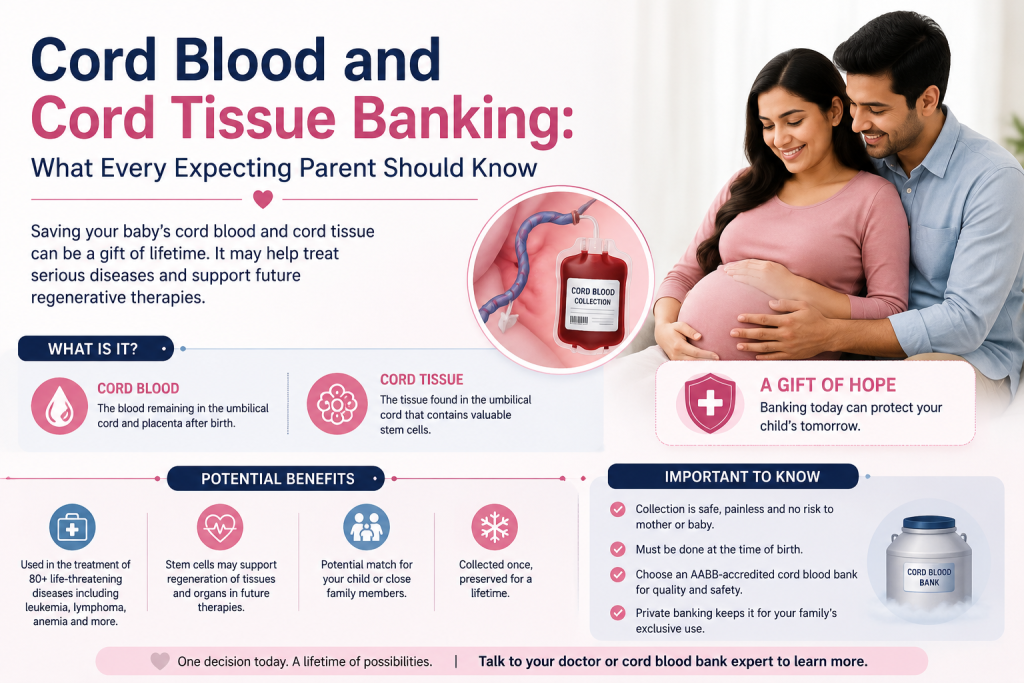
Most providers describe cord blood banking in Hyderabad in a standard way, but the right plan can vary based on the type of biological material, intended use, processing scope, and storage requirements. These factors can affect what parents receive as part of their banking plan.
Transcell Biosciences provides cord blood banking in Hyderabad for families exploring newborn stem cell storage. Parents may also compare cord blood with cord tissue banking to understand which option better matches their needs. This guide includes a comparison table and a practical checklist to help with that decision.
Cord Blood Banking Options in Hyderabad: What Determines the Right Choice?
The main decision driver is the intended future use of the stored biological material and the family’s medical history.
| Type / Option | Key Characteristics | Best Fit For |
|---|---|---|
| Cord Blood Banking | Stores blood collected from the umbilical cord after birth. It contains hematopoietic stem cells used in established blood and immune system transplantation. | Families considering private storage of cord blood for potential family use |
| Cord Tissue Banking | Stores umbilical cord tissue, including Wharton’s jelly, which contains cells being studied for research and future applications. | Families interested in tissue-based banking and emerging research |
| Cord Blood + Cord Tissue Banking | Combines storage of both biological materials under the applicable banking and processing plan. | Families seeking broader biological material storage |
| Public Cord Blood Donation | Cord blood is donated for potential use by compatible patients rather than reserved for one family. | Families who want to contribute to the public transplant system |
A simple way to understand the difference is this: cord blood has an established role in hematopoietic transplantation, while cord tissue is associated more strongly with research and developing applications.
Why Do Two Cord Blood Banking Quotes in Hyderabad Look Different?
Providers may not scope the same unit of work. A banking plan can differ depending on what is collected, processed, tested, stored, and included in follow-up services.
Common differences include:
- Bundling: Some plans may combine collection, processing, testing, and storage, while others separate these services.
- Complexity tiers: Processing and quality requirements can vary depending on the type of biological material being stored.
- Follow-up: Documentation, storage records, sample information, and future release procedures may differ between providers.
- Add-ons: Cord tissue storage, additional testing, or other laboratory services may be offered separately where available.
Parents should compare the complete scope rather than looking at one part of a banking plan. Quality controls, testing, storage conditions, and release procedures are important parts of the decision. India also has national guidelines covering cord blood collection, processing, testing, storage, banking, and release for clinical application.
Cord Blood Banking Types in Hyderabad: What Each Option Involves
Cord Blood Banking
Cord blood is collected from the umbilical cord and placenta after birth. It contains hematopoietic stem cells that have established uses in treating selected blood, immune, and related disorders through transplantation.
This can be a budget or mid-range fit depending on the scope of the selected banking plan. Families should first understand whether private banking is appropriate for their circumstances.
Cord Tissue Banking
Cord tissue refers to tissue from the umbilical cord, including Wharton’s jelly. It can be preserved for research and potential future applications, but parents should distinguish research potential from treatments that are already proven and routinely available.
This may be a mid-range fit for families seeking broader biological material storage.
It can be considered a premium fit when the family wants broader storage rather than cord blood alone. The choice should still be based on evidence, intended use, and family circumstances.
The option should fit the case, not be picked like a menu item.
Cord Blood Banking Checklist: Included vs Extra
| Often Included | Often Extra |
| Collection coordination | Cord tissue banking |
| Cord blood processing | Additional laboratory services |
| Quality and sample testing | Optional testing packages |
| Cryogenic storage arrangements | Additional services based on the storage plan |
One factor that can shift the overall plan is the intended use of the stored material. A family history of a condition that may potentially benefit from hematopoietic stem cell transplantation can make the discussion more relevant. Professional guidance also notes that routine private cord blood banking is not supported by available evidence for every family, so parents should make an informed decision rather than treating storage as guaranteed protection against future illness.
The Transcell Biosciences cord blood banking service page explains when cord blood banking is recommended and why intended future use and family medical history matter when choosing a banking plan.
Still Looking for the Best Cord Blood Banking in Hyderabad? Contact Transcell Biosciences
Transcell Biosciences offers cord blood banking in Hyderabad with a case-based approach to helping parents understand their available options. The goal should be to select a plan that matches the family’s circumstances, medical considerations, and intended storage purpose.
A simple path is:
- Consult: Discuss the pregnancy, family medical history, and banking goals.
- Confirm scope: Understand what will be collected, processed, tested, and stored.
- Choose the option: Compare cord blood, cord tissue, or a combined plan where available.
- Get the plan in writing: Review the services, storage terms, testing, and future release process before making a decision.
For information about cord blood banking in Hyderabad, contact Transcell Biosciences at +91 8985 000 888.